
The Dream#
I want to talk about you and me, and our, and our society’s relationship with technology. But allow me to start with a touch of history.
In 1936, mathematician Alan Turing conceived of theoretical machines that could be generally configured and reconfigured to operate in nearly infinite ways. He called these “Universal Turing Machines” because he imagined them being repurposed universally for any desired procedural calculation. Hundreds of years earlier people were programming looms and player pianos to weave fabric and play music, but Turing showed that programs of abstract, symbolic language could be used by general purpose machines to execute any procedure. Within a decade, groups in Britain and the United States cobbled together the world’s first computers. Turing expected machines to eventually learn, discover, strategize, and adapt. His contemporaries, like John von Neumann, imagined more near term uses such as simulating nuclear weapons, predicting the weather, modelling economics, game theory, and complex self-organizing systems. Vannevar Bush described his “Memex” machine idea in 1945–a desk-like personal computer that would be a personal digital library with links, search, and knowledge sharing–a tool for augmenting human memory 1. By the 1960s J. C. R. Licklider and Douglas Engelbart (who invented the mouse) went further, imagining personal computers that would augment individual and group intellect in writing, organizing, and collaborating. What all of these computer pioneers shared was an imagination of computers empowering individuals and confronting complex social problems.
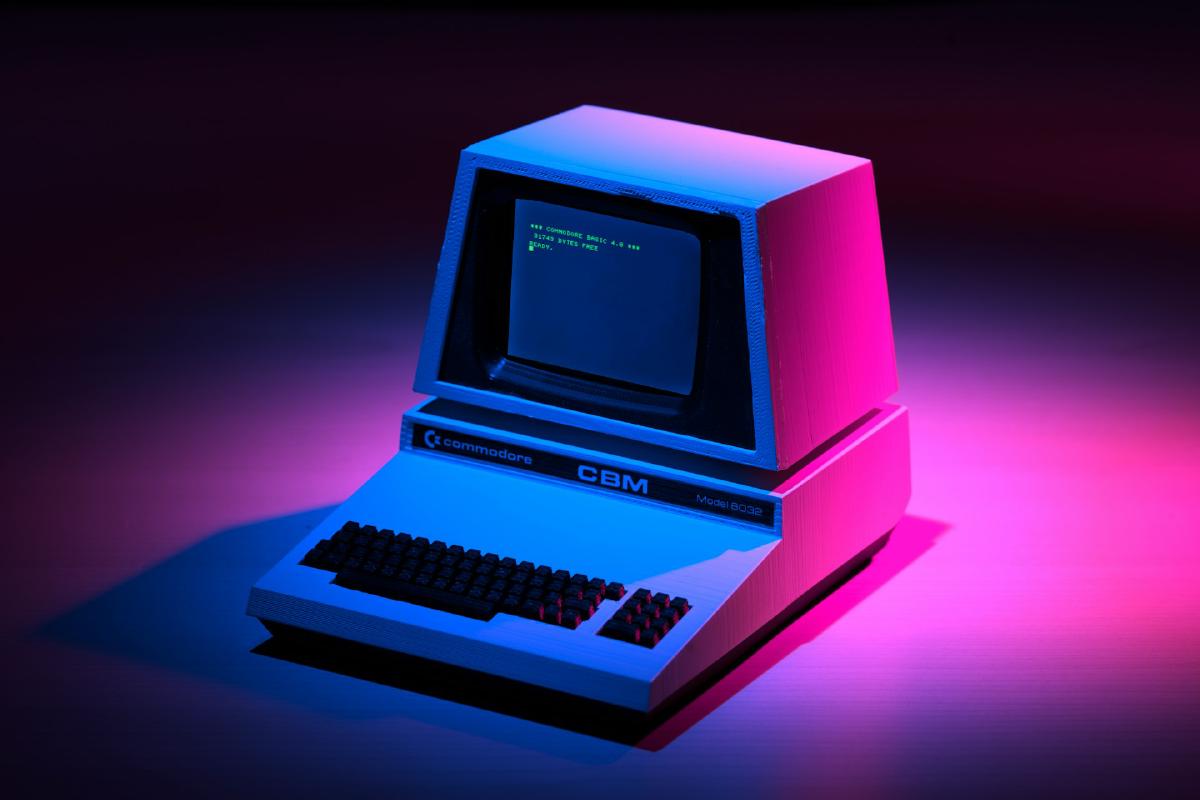
The first affordable personal computers were released in the 1970s. For the first time, the same machines that broke wartime encryption, developed the atomic bomb, landed humans on the moon, and were already becoming the backbone of finance and communication were available to be owned and operated by you. A “Personal Computer” was a path to personal empowerment. People imagined having their own personal computer would allow them to apply its power to all aspects of their lives. They saw computers as programmable, universal computation machines–tools for running complex computations over any data you wanted to feed them. Like other tools of the time–scientific calculators, cars, hammers–they imagined they would be able to personally wield the power to define and solve problems which, until then, had been the sole domain of governments, universities, and corporations. The common imagination was to write programs for budgeting, managing the household, running hobbies and small businesses, writing, and, of course, play games.
The Reality#
The problem, of course, was that programming was hard. Very hard. So hard, in fact, that companies sprung up promising to write your personal computing software for you. What the companies found out quickly was that if they wrote software for one person, they could easily sell that same software to another person, or a thousand other persons, as long as their particular needs weren’t that much different. Personal computers became a little less personal–in the sense of being less specifically for you (personalized). These early software companies had a problem, though, in that a personal computer itself is very good at making copies of programs–and you can’t sell programs if others are giving away copies for free. So software companies invented the “license”, and branded their programs, and eliminated access to the source code of their programs, and made other programs to prevent you from copying the software they allowed you to use. Personal computers became a lot less personal–in the sense of being something you no longer owned or controlled.
Of course, you could, generally, still write your own programs–at least the types of programs that the computer makers and operating system makers decided to allow you to write. But the bargain seemed, for most people, fair. You give some money, and the software company will write the personal programs you need to be empowered. Unfortunately, empowerment wasn’t the primary focus of software companies.
The desktop metaphor, realized in the desktop user interface (UI), powerfully shifted people’s mindsets from computers as universal computation tools to computers as application runners. The desktop became an interface for users to more simply manage the documents, spreadsheets, and media they gave to applications, while at the same time hiding the rest of the computation model: functions, processes, services, scheduled jobs, queues, data flows, indexes, query engines. These powerful concepts are still in your personal computer, they’ve just been hidden by arcane three-key combinations and special “power user” apps. It’s like taking away the kitchen and leaving you with the waiter and a menu. The public accepted this bargain–the software company will own the operating system and the applications, and you will own the files. In so doing, the public gave up the full spectrum of computation, settling just for ownership of data.
The arrival of the Internet–first over phone lines, then over cable–reignited the sense of personal technical empowerment. People imagined connecting their computers to one another, communicating directly and sharing information freely without the phone company or post office, and without mediation by newspapers, radio, and television stations. People once again imagined writing their own software and making their own webpages, hosted directly on their own personal computers. But again, this was hard, and companies sprung up to provide you their apps and let you host your content on their servers, and the personal computer became even a little less personal–in the sense of not even running your own software or holding your own data anymore. The bargain seemed reasonable–we’ll give you a small amount of money, or let you push us a few ads, or content into our feeds, and you’ll let us use your programs and Internet services.
Smartphones promised to be even more personal than the personal computer. Instead of being a shared desktop in your home or a laptop to be folded up in a bag, it literally began to feel like an extension of your physical self. But the promise was further away than ever. Instead of a pocket-sized personal computer, empowering each person with a tool for running complex computations over their own data, your phone was leased from a phone company, warranty voided if you tinkered with it, apps licensed by permission from a managed app store, with “your” data being hosted, managed, and used on their terms.
The Result#
Today, it’s been half a century from when those first personal computers arrived, so let’s reflect. Instead of learning to program ourselves, we’ve collectively bargained with companies to provide the technology we need. How has that been working out? On the one hand the world is more empowered, productive, educated, and connected than ever before–personal computing technology has indeed proliferated. On the other hand, the way we’ve bargained with companies to avoid programming ourselves has resulted in the technological problems that define our age:
- Data Sovereignty: Our data is often used and sold by others without our permission, on their terms.
- Privacy: The data we create and upload as well as the data we generate from our usage and connection with others is captured, monetized, and leaked.
- Addictive Engagement, Algorithmic Control: The programs we use are written not for our utility, but to capture and lock our attention, and to segment us into groups for other interested parties. We are shown what others want us to see rather than what we search for.
- Invasive advertisement: The actual users of these engagement programs are the companies and parties that pay to push us their messaging for their purposes, so we run gauntlets of invasive advertisements and mind-warping content to access basic information or entertainment.
- Censorship: Pluralistic voices, voices of dissent, or just unprofitable voices are marginalized in service of other people’s agendas.
- Subscriptions: Instead of sharing software, which is the very nature of computation, we continue to pay for the privilege to access someone else’s computer, increasingly at greater expense, for less usage, and on their terms.
I’m not trying to be all doom and gloom. I’m just describing where we have arrived. These are literally the seemingly unsolvable, and increasingly loud concerns of people globally. These are the concerns society attempts to mitigate with billion-dollar lawsuits and international policy and legislation.
But there’s one other problem that is seldom talked about–rarely even recognized–that, if it could be accounted for properly, might actually eclipse all of these other problems. The software we’ve been given doesn’t even do what we want! At the beginning, we imagined personal computers would be powerful tools to run computations over our own data for our own problems. So where do we have a global view of our finances, our health, or our property? Why is it so hard to manage tasks? Where is the software to manage my goals, plan across multiple areas of my life (work, community, family, and personal), keep track of my progress, and review periodically? Where do I enumerate my commitments and remember what I delegated to others? Why is there no way to schedule recurring data processing tasks? Why don’t I have all my communication in one place? Why is there no place to keep track of relationships or contacts? Why is it so hard to share what I want with people I want? Why can’t I seem to find the information that is important to me when I need it? Where can I see a log of my interactions with others? A list of the content I have created and modified? Why can’t I do science? Where do I manage my children’s schedules, keep track of what they need for their education, or activities? Why is it so damn hard to figure out how to track my medication regimen, or my diet, or my workout? How do I sync data to my phone? Why do I still not know how to make a web page?
Instead of the empowering personal computation tool we dreamed of, we have information and functionality spread out over dozens or hundreds of sites and applications, few of which do exactly what we wanted in the first place. We attempt to mold our needs and desires to fit other people’s products. We lose track. We give up. We pay subscriptions, invest our time, and sell our data for products that do a fraction of what we actually want. Do we even allow ourselves to think about what we really want from our personal computers anyway? Or are we just waiting for the next app hoping it might magically be the missing piece?
Most of us own multiple personal Universal Turing Machines, capable of running billions of computations per second, able to hold much of the collected knowledge of mankind, configurable to run a nearly infinite variety of programs, connecting at the speed of light to 30 billion devices across the entire planet. Today, we collectively own around ten billion personal computers. Few of us know how to do anything with them other than run a few apps, most often sending messages to friends, or consuming media, or playing games. I’m saying it, so far, has been a tragically lost opportunity.
Here’s the point of all this: most of the personal and societal-level technology problems (horrors, even) we experience today exist, primarily, because we didn’t figure out how to program our personal computers. 99.98% of us have never written a useful program in our lives. If we had, not only would these problems not exist, but we would have had billions more technically empowered people creating a vastly more developed society.
The Fork#
And all of that leads us to this one moment in the history of computer technology:
AI can program for us.
No really. It can.
And better than most of the 0.02% of humans who do it.
Yes, it’s too expensive. Yes, it still takes skill to prompt and to create correct, beautiful software. Yes, we need to immediately deal with potentially catastrophic environmental effects of poorly designed power, water, and waste systems. We’re not there quite yet, but I believe we will be soon, and when we arrive we’ll each find ourselves with the thought “Hmmm… I guess I can program now.”
When that thought comes, it’s important that a not insignificant portion of us think beyond making an app for the app store, writing that missing feature (usually exporting data) for that webapp you’ve been struggling with (really Fidelity, for shame). It’s important that our thoughts move back to a time before app stores, before social media, before even the desktop, and we imagine what the world would be like in a different timeline–the one where we were given Universal Turing Machines and we knew how to program them. It’s important because I am convinced we’ll find that most of the technologically-driven societal issues we face today will simply disappear, and it’s important because I think we will, for perhaps the first time, be truly empowered by our personal computers.
Dreaming Again#
Most of us can’t imagine our relationship with computers being any other way than it is today. Many people today don’t even remember, have never even dreamed of, the actual promise of personal computers.
So, let’s try. Imagine waking up tomorrow and pulling out your phone but you don’t pop open TikTok, or Google News, or Reddit, or Google Calendar or Teams. You don’t dismiss the dozen notifications from apps you never figured out how to turn off. You instead tap on your app. It opens up and you instantly see all the things you care about, with your day laid out before you, welcoming you to another day. Nobody gave you this app. You don’t need permission to use it. It’s yours. Your data isn’t on some other service in some other data center. Your data, and services that expose it are running on your desktop computer in your office, or the tiny computer (a Raspberry Pi perhaps) in your closet. Nobody else has access to your app or your data. It’s secure and backed up and just the way you like it.
You check your calendar and see the events synced from your email RSVPs, and the work tasks you scheduled yourself from the day before, and a reminder of your goals for the day. You see you have a lunch meeting with a new work colleague so you tap on it to read the agenda. It’s related to a project you’re working on, which you tap into to refresh yourself on its progress and spend a few minutes reviewing the details from your built-in wiki. Popping back you tap on your colleague and review all of your previous interactions with them and their connections with other people in your network. This is still all your data, on your personal computer, collected over weeks and months, always at your fingertips. It’s software for you, by you. You’re in control.
You hop out of bed and head to the bathroom where you open the medications and supplements page and tick off the ones you take as part of your personal morning health protocol. You step on the scale and it syncs your latest reading to your app using the service you programmed last month. Great progress! But you still want to reserve that extra session at the gym tonight, so you tap the button next to your weight reading–the one you put there last week when you realized that was the best place to have it, where you were most motivated. It automatically sends an SMS reservation, which you flagged as your gym’s preferred contact method and puts it on your calendar. You hop in the shower and press the IoT button you installed on the wall. It connects to your personal computer and begins playing the routine you programmed using the information it pulled off the web overnight–news on your topics, suggested investment strategy changes based on your latest market models, reminders of those mindsets you’ve been trying to internalize, a quiz to help remember the names of the people you met at the community gathering last week, all to a song that was just released from your favorite artist. Of course there are no ads… uff… sometimes you remember when there used to be ads. It starts reading off the next chapter from the book you checked out from the online library, but you never have time, so after you dry off, you grab your phone, open your app to your programs page and drag the book reader from the shower section to your commute section. There are no settings pages to navigate, this is your app, your system, a truly personal computer.
While eating your breakfast, you’re thinking about how you keep missing your bus. Your friend told you last week the city has a live bus schedule API. You’ve been thinking it would be really nice to have the bus departure times show up on your next scheduled event on your calendar. Your app can read the location off your phone, so really, it should be able to know where you’re at and where you need to be next and figure out the route and times. You pop open your AI assistant and describe this feature. After a few clarifying questions, it gets to programming. You get all your things together, pull on your shoes, and grab a coat. On the way out the door you glance at your calendar… the next bus leaves in 14 minutes. Plenty of time.
On the bus, you turn on the VPN on your phone. You are always securely and privately connected to your home network, meaning you can use your apps anywhere. You’ve been helping with a neighborhood garden-patch project. At last week’s meeting you all decided to create a tool library and you volunteered to host the tool inventory and checkout app. You’ve been programming it in your spare time since then. You pop open the ToolShed app and see the last round of feedback from your neighbors. Nice! They liked the latest background images and button designs. It just looks like they have some updates to the tool inventory and it’s ready to go. You prompt your coding assistant to integrate the feedback and tell it to make the site live. It does so instantly. After all, all it needed to do was publish the DNS record to your home router, add a rule to your reverse proxy, and now internet traffic is being routed live to your personal computer in a secure VLAN. All you know is–it’s available on the net now–so you tell your assistant to notify the group, which it does through your personal app using each person’s preferred contact method. By the time your bus drops you off, you have already received some excited responses from your neighbors and a spade has already been reserved.
I could go on forever on these imaginary scenarios–the ones above are certainly low impact, but they’re real and they add up. Maybe they use their personal computer for crunching latest sales projections by ingesting data and modelling scenarios. Maybe they use it to track their kids’ educational progress with data provided by the school cross-referenced with new research or their personal learning styles. Maybe they are really trying to break some habits and form some new ones. Maybe they’re trying to figure out evidence-based proposals for city-planning initiatives. The point is, all of their data is private, all of it is their own, their software and personal computer is tailored exactly for them, and they don’t need to ask permission from anyone to program it to provide services for themselves, their family, and their community. There are no apps. There are no platforms. They are in control.
Finally, our Universal Turing Machines are empowering us like we dreamed they would in 1975.
Moving Forward#
So, is this just a fever dream? Well, no actually. This is how I’m already working. My next article will detail “Wild PC”, a project aimed at stripping away the last few decades of app store and desktop cruft by providing a thin platform on top of OS primitives as a home for your own AI-made programs and a new, err… old, way of thinking about personal computers. It’s not a desktop. It’s a new kind of interface for empowering you with your very own personal computer.
Vannevar revisited progress towards personal computers in this 1965 article–20 years after his Memex idea: “Will we soon have a personal machine for our use? Unfortunately not. … It will be delayed in coming principally by costs, and we know that costs will go down, how much and how rapidly none can tell.” But he was still dreaming: “It is worth striving for. Adequately equipped with machines which leave him free to use his primary attribute as a human being-the ability to think creatively and wisely, unencumbered by unworthy tasks-man can face an increasingly complex existence with hope,even with confidence. Presumably man’s spirit should be elevated if he can better review his shady past and analyze more completely and objectively his present problems.” ↩︎